







Each spring, purple martin landlords across North America begin watching the skies for the return of one of the continent’s most recognizable migratory birds. On our farm, preparing for their arrival begins before the birds actually appear. This year, we made the decision to rehang our purple martin gourd racks earlier than usual in anticipation of their return.
Purple martins migrate thousands of miles from their wintering grounds in South America to nesting sites across the United States and Canada. Because of this long journey, their arrival timing can vary from year to year depending on weather patterns and migration conditions along the route. For those who manage martin housing, preparation ahead of their arrival is an important part of supporting a healthy colony.
Watching the Scout Arrival Study
One of the tools we rely on each spring is the Scout Arrival Study organized by the Purple Martin Conservation Association. This nationwide study tracks the first sightings of returning martins, often referred to as “scouts.” Purple martin landlords and bird enthusiasts report the date and location of their first arrivals, creating a map that shows how the migration is progressing northward.
By monitoring this study each year, we can see how quickly the birds are moving through different regions and get a better sense of when they may reach our area in southern New Jersey. Watching these reports helps us decide when it’s time to prepare our nesting sites.

Screenshot of Scout Arrival Map on 3/9/26
Observing Reports from Other Martin Landlords
In addition to the scout arrival study, we also pay attention to conversations among experienced martin landlords who closely follow the species each season. Many of these discussions happen in online communities where people share updates about their colonies and migration observations. On great example of such forum is the Purple Martin Fanatics on Facebook.
This year, many landlords have been reporting that their martins are arriving roughly twenty days earlier than usual. While migration timing can vary by location and weather conditions, these reports suggested that it would be wise to prepare our gourd racks sooner rather than later.

Getting the gourds out of storage
Looking Back at Last Year’s Arrival
Our own observations from last year also influenced our decision. In 2025, the first purple martins arrived here around March 28. Even though the current forecast includes a brief warm-up followed by colder temperatures again, migration patterns do not always follow the same schedule every year. We usually see the martin return early to mid April.
By rehanging our gourds early, we ensure that the nesting sites are ready whenever the birds arrive. Preparing ahead of time allows us to avoid rushing later and ensures that the colony will find suitable housing waiting for them.

Picture of first Purple Martin to show up on the farm in March 2025
Rehanging the Gourds and Preparing the Racks
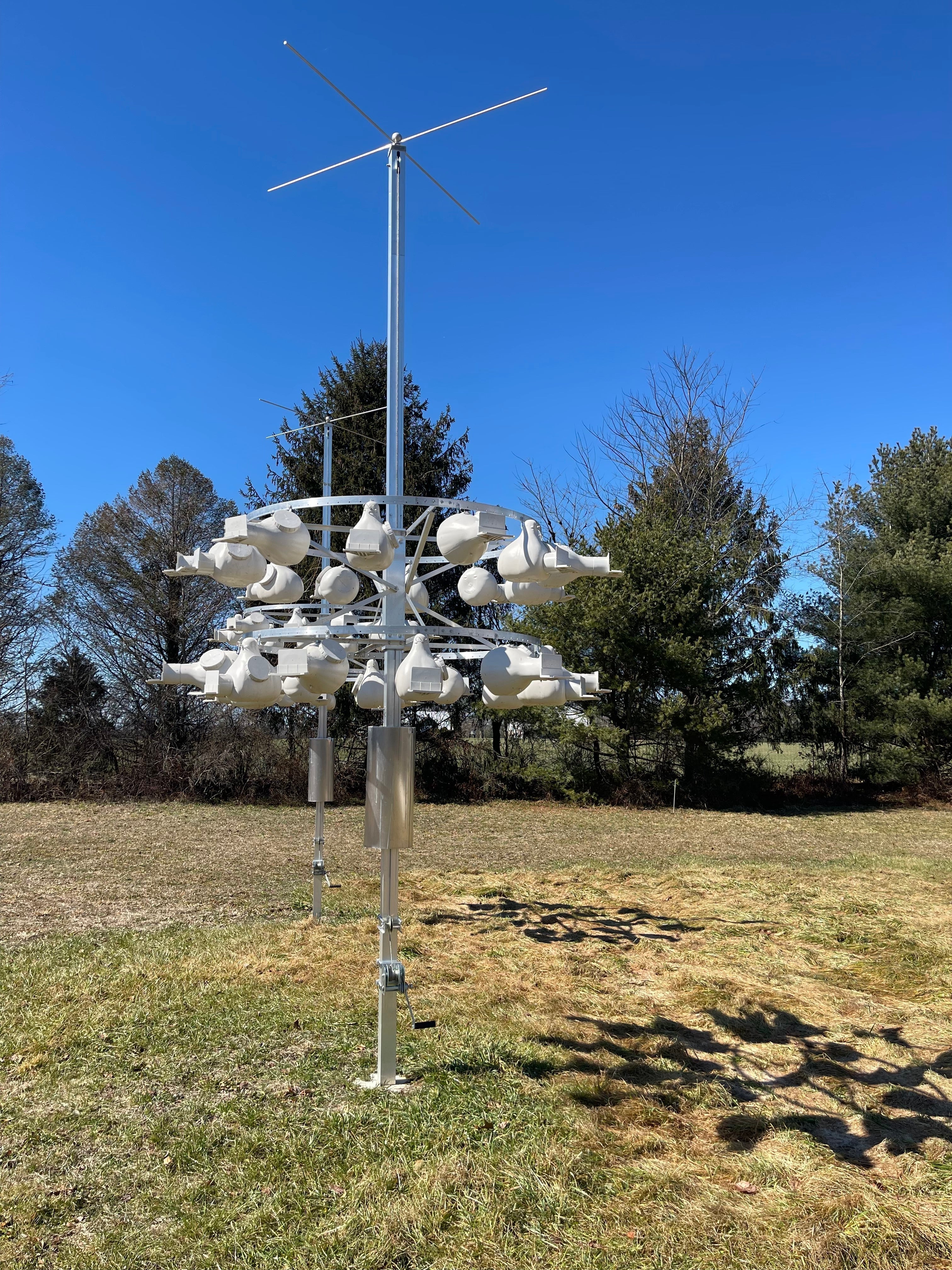
Reinstalling the gourds is one of the first steps in getting ready for martin season. The racks are lowered and the gourds are put back in place so they are ready for occupancy once the birds return.
Although the gourds are now hanging on the racks, the entrances are temporarily closed using small door shields. This helps prevent unwanted species such as house sparrows and European starlings from entering and starting nests before the martins arrive. These non-native birds are known to compete aggressively for nesting cavities, so keeping the entrances closed until martins return helps protect the housing.
We will continue monitoring the scout arrival study and watching our racks closely over the coming weeks. Once martins are observed returning to the area, the entrances will be opened so they can begin exploring and claiming their nesting sites.

The gourds slide onto the aluminum hanger and are secured with a cotter pin

First rack rehung with gourds

Door shield attached to the vertical style gourd
Preparing Bedding with Pine Straw
With the gourds now in place, the next step is preparing the interior of each one for nesting. We gather pine straw and place a layer inside each gourd to create a bedding base.
Pine straw is commonly used by purple martin landlords because it works well in the enclosed environment of a gourd. It allows moisture to drain away easily and promotes airflow inside the nest cavity. The texture also provides a stable base that helps keep eggs from rolling once they are laid.
When the martins begin building their nests, they often incorporate the pine straw into the structure they create inside the gourd. Providing this material ahead of time gives them a helpful starting point once nesting season begins.
Expanding Our Colony with Another Gourd Rack
This year we are especially excited about preparing for the martins because we will be adding another gourd rack to the colony. Last season our housing reached full capacity, with every available gourd occupied by nesting pairs.
Adding an additional rack will create more nesting opportunities for returning birds and may allow new pairs to establish themselves here as well. Expanding housing is one way martin landlords can support the growth and stability of local colonies.

Two of our Troyer Gemini Racks
Waiting for the Martins to Return
Now that the gourds are rehung and the racks are ready, the waiting begins. Early spring is a time of anticipation for purple martin landlords as migration progresses northward and the first birds begin appearing across the landscape.
Over the coming weeks we will continue watching the migration reports and keeping an eye on the racks for signs of returning martins. Their arrival marks the beginning of another nesting season and one of the most exciting times of the year for those who care for these remarkable birds.