






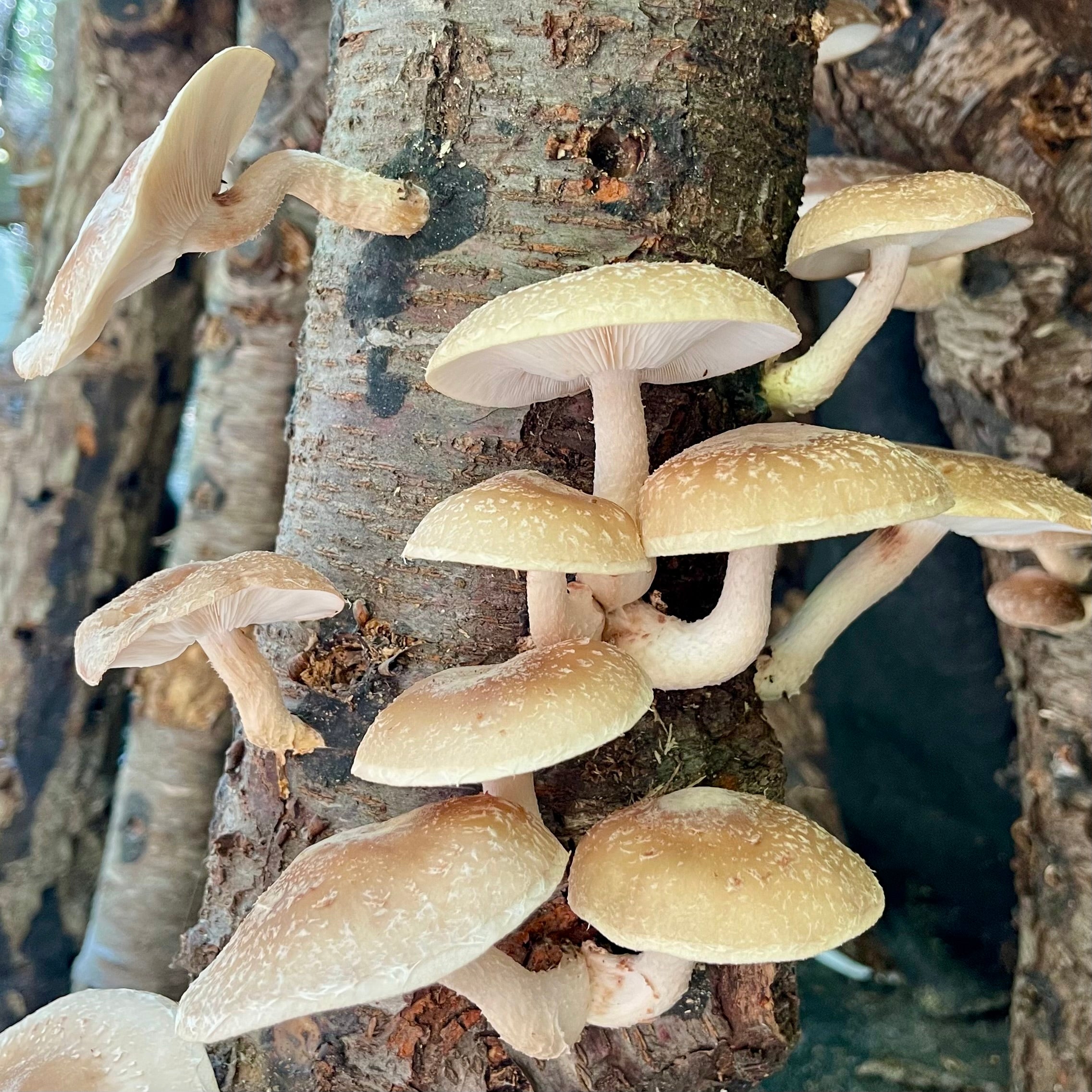
Mushrooms have become increasingly popular in recent years, appearing in home kitchens, farmers markets, and a wide range of food products. As interest grows, many people begin to notice that mushrooms can be cultivated in different ways. Two of the most common methods used by farmers are growing mushrooms on hardwood logs outdoors and growing mushrooms indoors using bags or buckets filled with prepared substrate.
While both methods produce edible mushrooms, the way they are cultivated differs significantly. The growing environment, materials used, production timeline, and overall farming approach can vary depending on the system. Understanding these differences helps provide a clearer picture of how mushrooms are grown and why different farms use different cultivation methods.
What Are Log-Grown Mushrooms?
Log-grown mushrooms are cultivated outdoors on natural hardwood logs. This method closely resembles how many mushroom species grow in nature, where fungi colonize fallen or dying trees.
To begin the process, hardwood logs—often from species such as oak or cherry—are inoculated with mushroom spawn. Spawn contains the living mycelium of the mushroom, which is the network of fungal cells responsible for producing mushrooms. Small holes are drilled into the logs, the spawn is inserted, and the holes are sealed with wax to protect the developing mycelium.
After inoculation, the logs are placed in shaded outdoor areas where the mycelium slowly spreads throughout the wood. Over time, the fungus colonizes the interior of the log and eventually produces mushrooms when environmental conditions are suitable. Because the process occurs outdoors, temperature, rainfall, and seasonal humidity all influence when mushrooms appear.
This colonization process takes time. Logs may require 12-18 months before producing their first harvest, but once established, they can continue producing mushrooms for several years.
What Are Indoor Bag-Grown Mushrooms?
Indoor mushroom cultivation uses a different growing system. Instead of whole logs, mushrooms are produced using bags or buckets filled with a prepared growing medium known as substrate.
The substrate is typically made from materials such as sawdust, grain, straw, or other agricultural byproducts that provide nutrients for fungal growth. Before inoculation, the substrate is usually sterilized or pasteurized to remove competing microorganisms. Mushroom spawn is then mixed into the substrate and the mixture is sealed inside plastic grow bags or containers.
These bags are placed inside controlled growing rooms where temperature, humidity, airflow, and lighting are carefully managed. Because the environment can be adjusted and maintained consistently, farmers are able to encourage mushroom growth on a predictable schedule.
Indoor systems are widely used in commercial mushroom production because they allow mushrooms to be grown throughout the year under stable conditions.
Differences in Growing Environment
Log-grown mushrooms develop outdoors in shaded areas, often beneath forest canopies or shade structures. Because they grow outside, they respond to natural weather patterns such as rainfall, seasonal temperature changes, and humidity levels. These environmental factors help trigger mushroom formation and influence when harvests occur.
Indoor bag-grown mushrooms are cultivated in enclosed spaces designed to maintain specific environmental conditions. Temperature and humidity are regulated, airflow is controlled, and lighting can be adjusted to support the stages of mushroom development. With these conditions managed indoors, farms are often able to produce mushrooms consistently regardless of the season.
Differences in Growth Timeline
Log-grown mushrooms require a longer establishment period. After a log is inoculated with spawn, the mycelium gradually spreads through the hardwood. This colonization process can take 12-18 months before the first mushrooms appear. Once the log is fully colonized, however, it may continue producing mushrooms seasonally for several years.
Indoor bag-grown mushrooms typically develop more quickly. The prepared substrate is designed to allow the mycelium to spread rapidly, and mushrooms can begin forming within a few weeks after inoculation. The growing medium is generally used for a limited number of harvests before it is replaced with new substrate.
Differences in Materials Used
Log-grown mushrooms rely on whole hardwood logs as their growing medium. The wood serves as both the food source and structural base for the developing fungus. As the mycelium grows, it slowly breaks down the wood as part of its natural lifecycle.
Indoor bag-grown systems use prepared substrate mixtures rather than solid logs. These substrates often contain finely processed materials such as sawdust, straw, grain, or other agricultural byproducts that provide nutrients for the fungus. The substrate is held inside plastic grow bags or containers to maintain moisture and create a controlled growing environment.
Differences in Production Systems
Log-grown mushroom cultivation typically follows longer cycles and seasonal harvest patterns. Once logs are established, they may produce mushrooms multiple times each year depending on weather conditions and moisture levels. Over time, the logs gradually decompose as the fungus consumes the wood.
Indoor bag-grown systems operate in more controlled production cycles. Substrate bags or buckets move through stages of preparation, inoculation, colonization, and fruiting inside climate-controlled spaces. After the substrate has completed its production cycle, it is removed and replaced with new material to begin the process again.
Why Farms Use Different Growing Methods
Both log-grown and indoor bag-grown mushroom cultivation systems are widely used by farms around the world. The method a farm chooses often depends on available resources, climate, infrastructure, and production goals.
Indoor growing systems allow farmers to regulate environmental conditions and schedule production throughout the year. This can support consistent supply and large-scale cultivation.
Log-grown systems make use of natural hardwood resources and outdoor growing environments. Farms that manage woodland areas or practice forest stewardship often integrate mushroom cultivation with the use of harvested hardwood logs.
How Our Mushrooms Are Grown
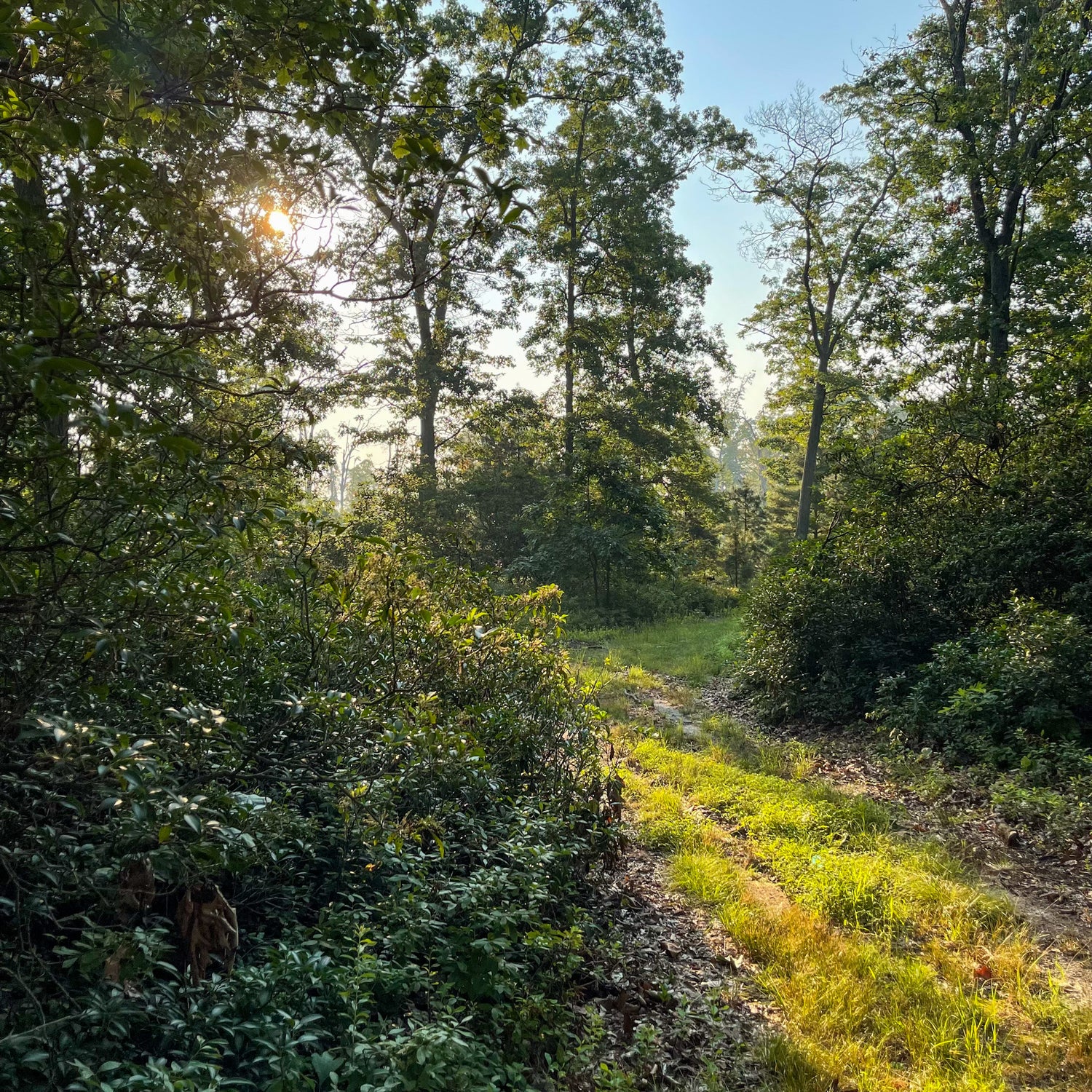
On our farm, mushrooms are cultivated on hardwood logs. The logs used for mushroom production come from trees harvested during our forest management practices. After the logs are cut to size, they are inoculated with mushroom spawn and placed in shaded woodland areas.
The logs remain outdoors as the mycelium slowly colonizes the wood. Over time, mushrooms develop in response to natural environmental conditions such as rainfall, temperature, and seasonal humidity. This process allows mushroom cultivation to be integrated with the ongoing cycle of forest management on the farm.
Final Thoughts
Mushrooms can be cultivated in different ways, and each method reflects a different approach to growing this unique crop. Log-grown and indoor bag-grown systems both produce edible mushrooms but rely on different materials, environments, and production timelines.
Understanding how mushrooms are grown provides insight into the many ways farmers cultivate fungi and highlights the diversity of methods used in mushroom production.





1 comment
Very interesting explanation about the two ways of growing mushrooms.
I learned something today. Thanks!