



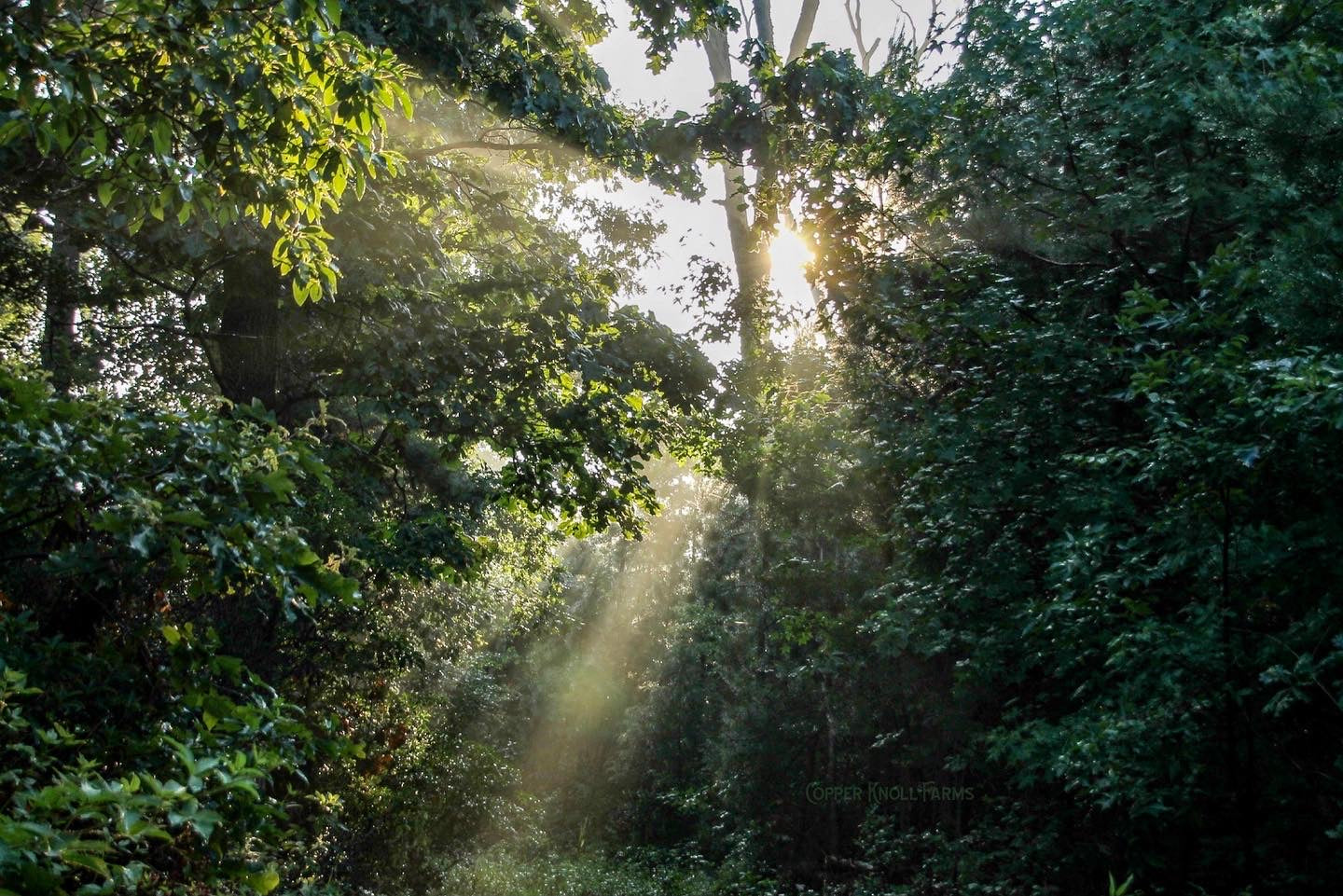
When most people think of agriculture, they picture open fields, rows of crops, and tractors moving across farmland. Forests feel different — quieter, wilder, separate from farming altogether.
But forests, especially here in southern New Jersey, don’t simply take care of themselves. They are living systems shaped by decades — sometimes centuries — of change. And when land is intentionally cared for to produce food, materials, and renewable resources, it begins to look a lot like agriculture — even if it doesn’t resemble a traditional field.
What Is Forest Management?
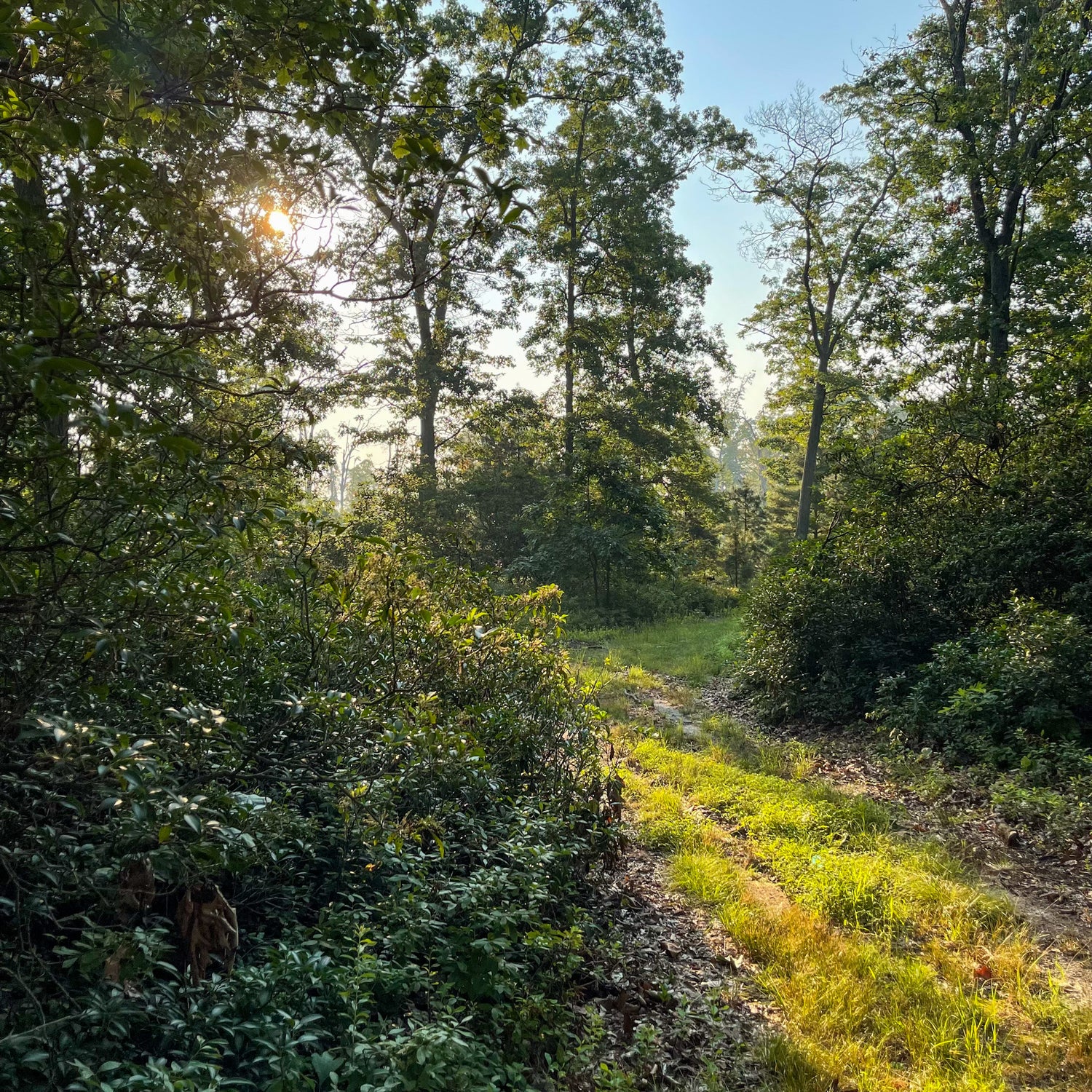
From the beginning, we understood that our woods would need management. They aren’t untouched wilderness. Like much of our region, they are second-growth forests influenced by past farming and human activity. Left completely alone, they can become overcrowded, dominated by less desirable species, or weakened over time. Doing nothing is still a decision — and not always the healthiest one.
On our farm, forest management means observing carefully and making selective, thoughtful decisions. When we harvest trees, we focus primarily on standing dead timber or trees that are misshaped, leaning, or showing signs of disease or decline. Before removing anything, we look closely for signs of wildlife use — woodpecker holes, owl cavities, or evidence of animals relying on that tree. If it shows active habitat, it stays.
We also thin certain species, such as sweet gum, not out of convenience but with intention. Sweet gum has limited value as timber due to its tendency to warp and its poor resistance to rot, and in many areas it can crowd out more desirable, longer-lived species. By gradually removing some of these trees, more light reaches the forest floor and space opens for healthier growth. Our long-term goal is to encourage and replant species like oak that provide stronger timber, better wildlife value, and greater longevity.
At the same time, we’re piloting the use of sweet gum logs in our mushroom production. While it may not be ideal for lumber, its characteristics can be well suited for cultivating certain mushroom varieties. Instead of seeing it as waste, we’re exploring how to use what the forest naturally provides. That mindset — looking for productive use within a larger system — is part of how we approach stewardship.
The goal is never removal for removal’s sake, but balance. Over time, the woods become more diverse, more stable, and better equipped to thrive for decades to come.
How Forests Produce Food and Renewable Resources
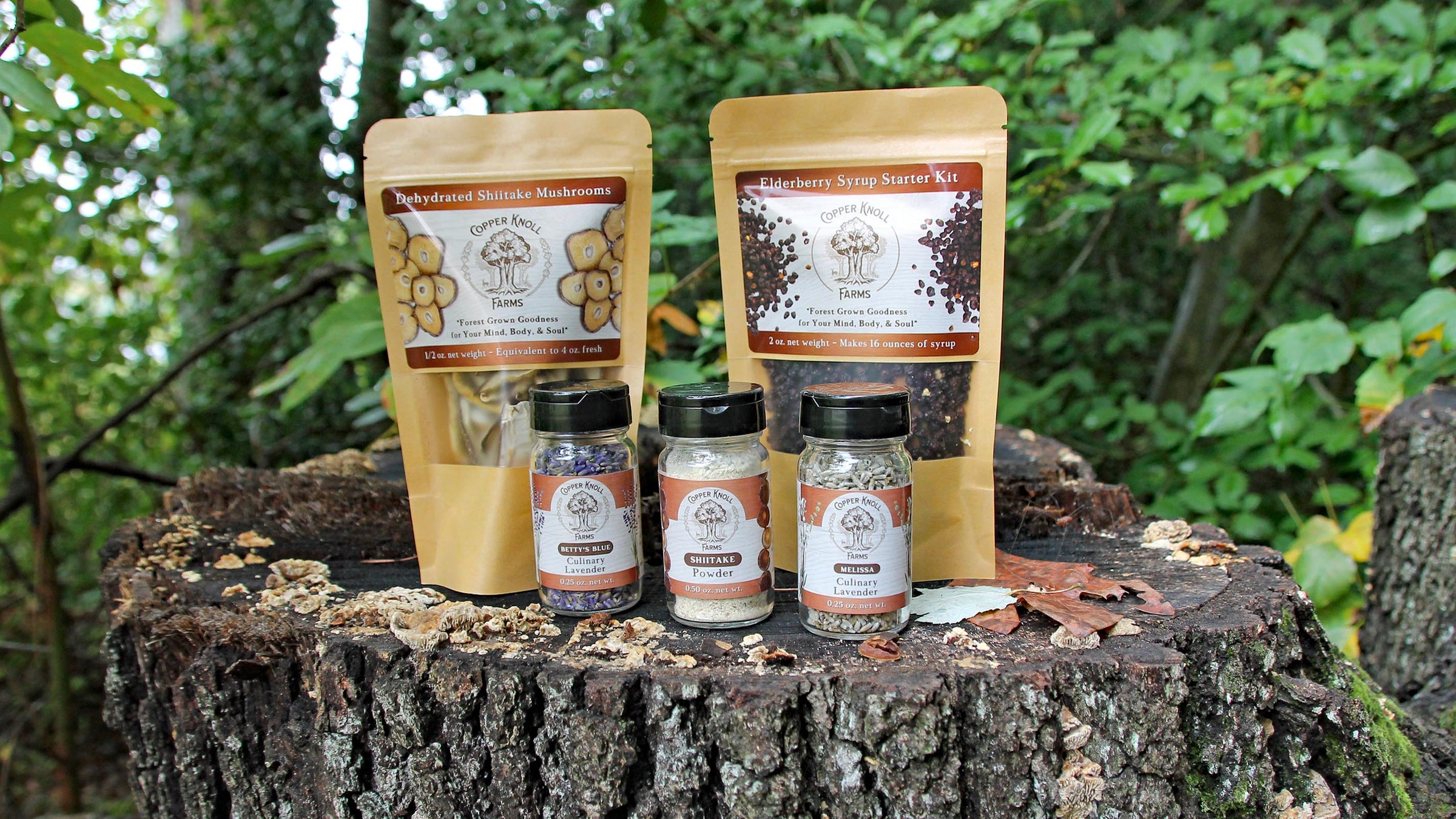
One of the clearest reminders that forests are agricultural systems comes each time mushrooms emerge from logs harvested from our own woods. After selecting suitable hardwood, we cut the logs, inoculate them, and stack them in a shaded area beneath the trees. They rest there through the seasons, absorbing moisture and slowly becoming part of something new. Months later, mushrooms begin to fruit from bark that once stood upright in the forest.
Watching that process never feels routine. A tree that might otherwise be considered timber becomes a source of food. The forest is still producing — just in a way that unfolds more slowly and quietly than a field crop.
That same mindset carries into how we approach firewood. Removing carefully selected trees improves safety and forest structure while also providing a renewable resource. The goal isn’t simply to cut and remove, but to think about how each harvest fits into the long-term health of the woods. Growth, harvest, and regeneration are all part of the same cycle, even if they happen on a longer timeline than most people associate with farming.
When you begin to see those connections — mushrooms growing from harvested logs, firewood coming from trees that have reached the end of their life cycle — it becomes easier to understand how a managed forest can function as a productive, agricultural system.
Should Forests Be Left Untouched?
It’s a common assumption that forests are healthiest when left completely alone. But many forests in our region are not ancient wilderness. They are forests shaped by storms, former farmland, and decades of human influence. What looks natural today is often the result of earlier disturbance, and those past events continue to shape how the forest grows.
In different parts of our own woods, that history is easy to see. In the northeast section, a hurricane years ago flooded out many of the oaks, and sweet gum quickly filled the open space. Because sweet gum grows aggressively, it created a dense stand that began crowding out other species. In the back section of our forest, we see another pattern — closely spaced oak trees competing heavily for light. Over time, that tight canopy has resulted in smaller trees, each limited by the lack of space and sunlight.
When forests grow in these dense patterns, the canopy can become so thick that very little light reaches the forest floor. Without sufficient light, fewer seedlings establish, and the diversity of understory plants begins to decline. The forest may still look full and green, but it is not necessarily growing stronger or more resilient.
Thoughtful thinning gently shifts those conditions. By selectively removing certain trees, we allow more light to filter through the canopy and reach the ground below. In the areas we’ve thinned, we are already beginning to see more regeneration — young growth responding to the additional space and light. The forest doesn’t need to be controlled; it needs room to function as it was designed to.
Forest management, for us, is about recognizing these patterns and responding carefully. It means paying attention to what each section of the woods needs and making decisions that support long-term health rather than short-term appearance.
Wildlife and Forest Stewardship
We’ve noticed changes in wildlife over time. In the first couple of years after we purchased the farm, something felt oddly quiet. We rarely saw squirrels or rabbits. As we began actively managing habitat and caring for the land more intentionally, the woods slowly felt more alive.
Through our bluebird trail, we’ve watched bluebirds return year after year. The forest feels more balanced now — not because it is untouched, but because it is tended.
Wildlife often becomes one of the clearest indicators of forest health. When habitat improves — light reaches the understory, tree diversity increases, edges are thoughtfully maintained — animals respond. Seeing that response over time has reinforced for us that careful management and healthy habitat go hand in hand.
Why Forest Management Matters to You
Even if you don’t own wooded land, forest management affects you. If you heat your home with firewood, care about wildlife habitat, enjoy walking through healthy woods, or value renewable local resources, you are connected to forest systems. Understanding that forests can be working landscapes — not just scenery — shifts how we relate to them.
When we walk through the woods we manage, it feels both relaxing and deeply satisfying. There is a sense of stewardship in knowing we are improving its health for future generations, not simply using it for the present.
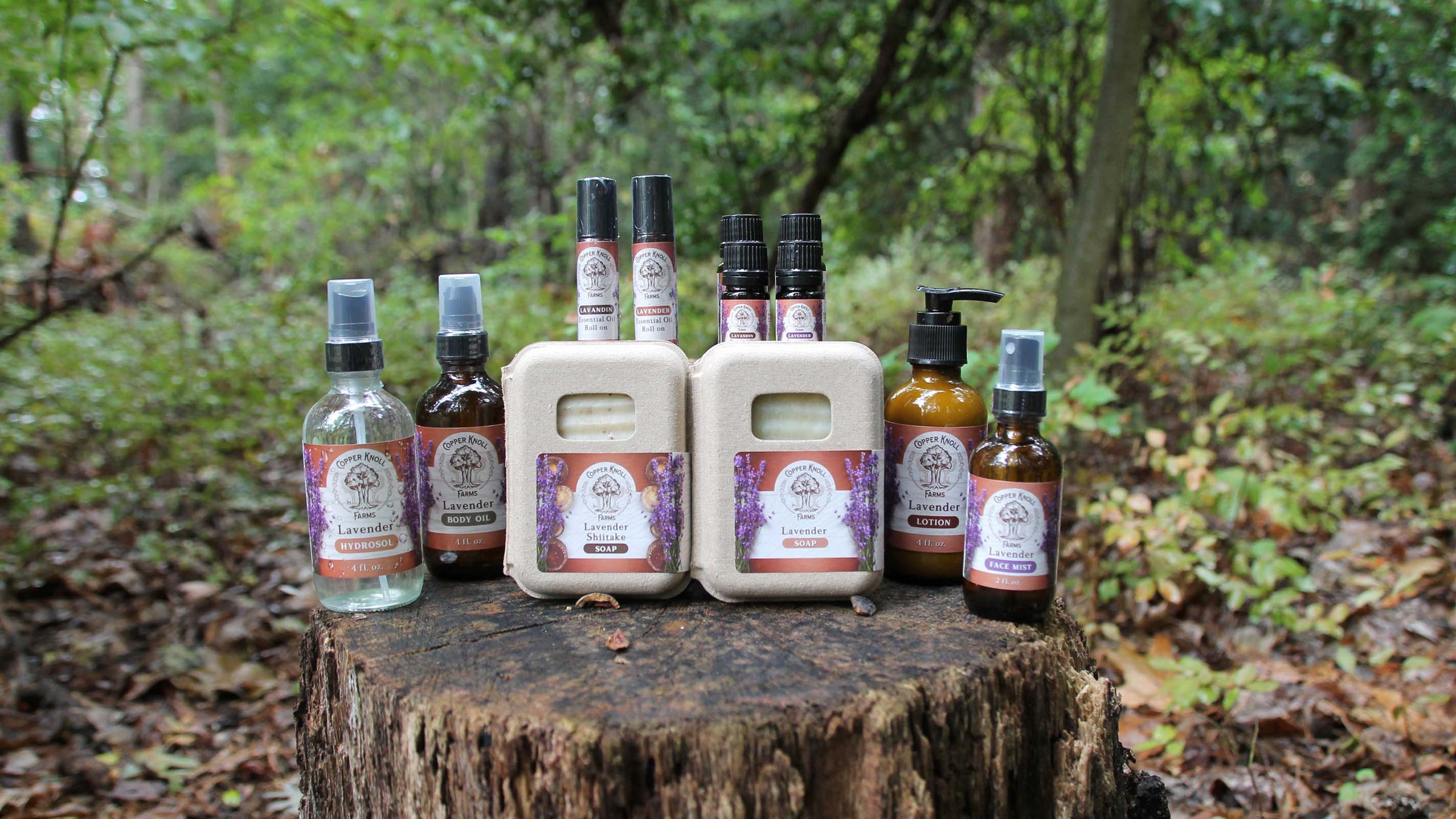
Our fields and forests are not separate parts of the farm. Lavender grows in open sunlight. Mushrooms fruit in shaded woods. Wildlife moves between both. Everything we offer comes from intentional care of land.
Farming has always been about thinking beyond the present season. Forest stewardship simply stretches that timeline. It asks us to care for land not just for this year’s harvest, but for the decades to come.