






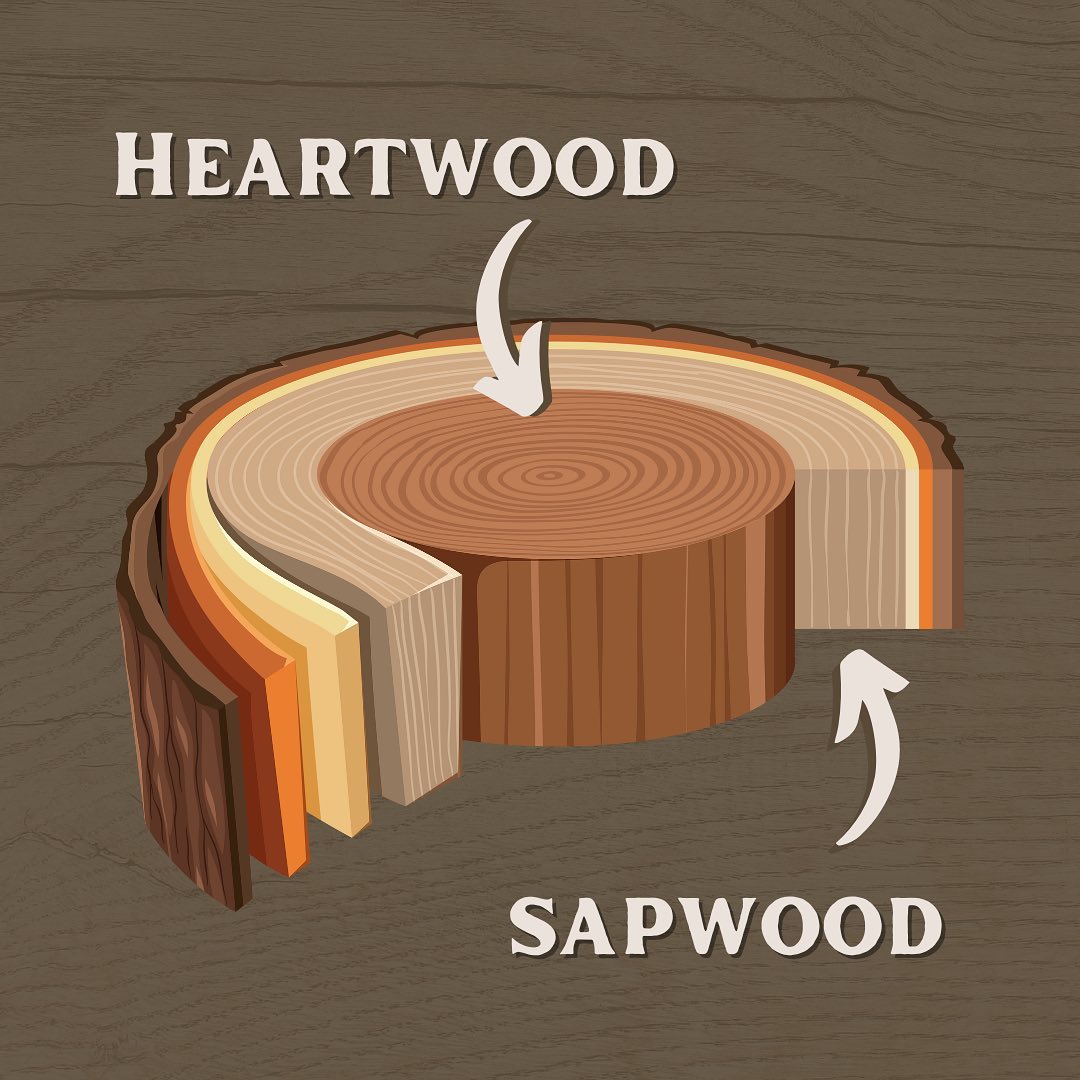
Did you know that trees have different layers of wood?
When you look at a freshly cut log, you may notice rings of different colors and textures. These differences are not just visual — they reveal how a tree functions and how wood changes over time as it grows.
Understanding the difference between sapwood and heartwood helps explain everything from tree health to firewood quality and even how wood behaves when used for building or crafting.
What Is Sapwood?
Sapwood is the outer layer of wood located just beneath the bark. This part of the tree is alive and actively working.
Its primary job is to transport water and dissolved minerals from the roots up to the leaves and crown of the tree. Think of sapwood as the tree’s plumbing system.
Because it carries moisture, sapwood:
-
Contains a higher water content
-
Is generally lighter in color
-
Is less dense than heartwood
-
Is more biologically active
Sapwood cells are constantly moving nutrients, which makes this layer essential for growth. However, this also means sapwood tends to dry more slowly after a tree is harvested and can be more susceptible to fungi or insects if not properly seasoned.
What Is Heartwood?
Heartwood forms at the center of the tree as older sapwood cells naturally age and stop transporting water. Over time, these cells become infused with natural compounds such as resins, tannins, and oils.
Although heartwood is no longer alive, it plays a critical role by providing structural strength and stability to the tree.
Heartwood is typically:
-
Darker in color
-
Denser and stronger
-
Lower in moisture content
-
More resistant to decay and insects
These natural compounds are why heartwood from species like oak is valued for durability and long-lasting performance.
How Sapwood Becomes Heartwood
As a tree grows outward each year, new sapwood forms near the bark. Older inner sapwood gradually transforms into heartwood through a natural aging process. The tree essentially builds a strong internal core while continuing to grow new functional layers on the outside.
This process is visible in growth rings, which tell the story of the tree’s life year by year.

Why This Matters for Firewood
The difference between sapwood and heartwood directly affects how wood burns.
-
Sapwood, with its higher moisture content, requires thorough seasoning before burning efficiently.
-
Heartwood is denser and typically produces longer-lasting heat once properly dried.
In hardwood species like oak, the large heartwood core contributes to the slow, steady burn that makes it such desirable firewood.
When harvesting trees through responsible forest management, understanding these differences helps ensure wood is properly processed and seasoned for the best performance.
A Living Structure
A tree is far more than a solid piece of wood. It is a layered, living system — transporting water, storing energy, and strengthening itself year after year. The contrast between sapwood and heartwood is a reminder that even after harvest, the story of the tree remains visible in every cut surface.

Chester cutting an oak tree with large heartwood