





One of the things I love most about having a bluebird trail on the farm is getting to watch the season unfold from the very beginning. Each spring, we wait for the birds to begin building their nests. Before long, there are eggs, tiny hatchlings, and eventually the day when they are old enough to be banded.
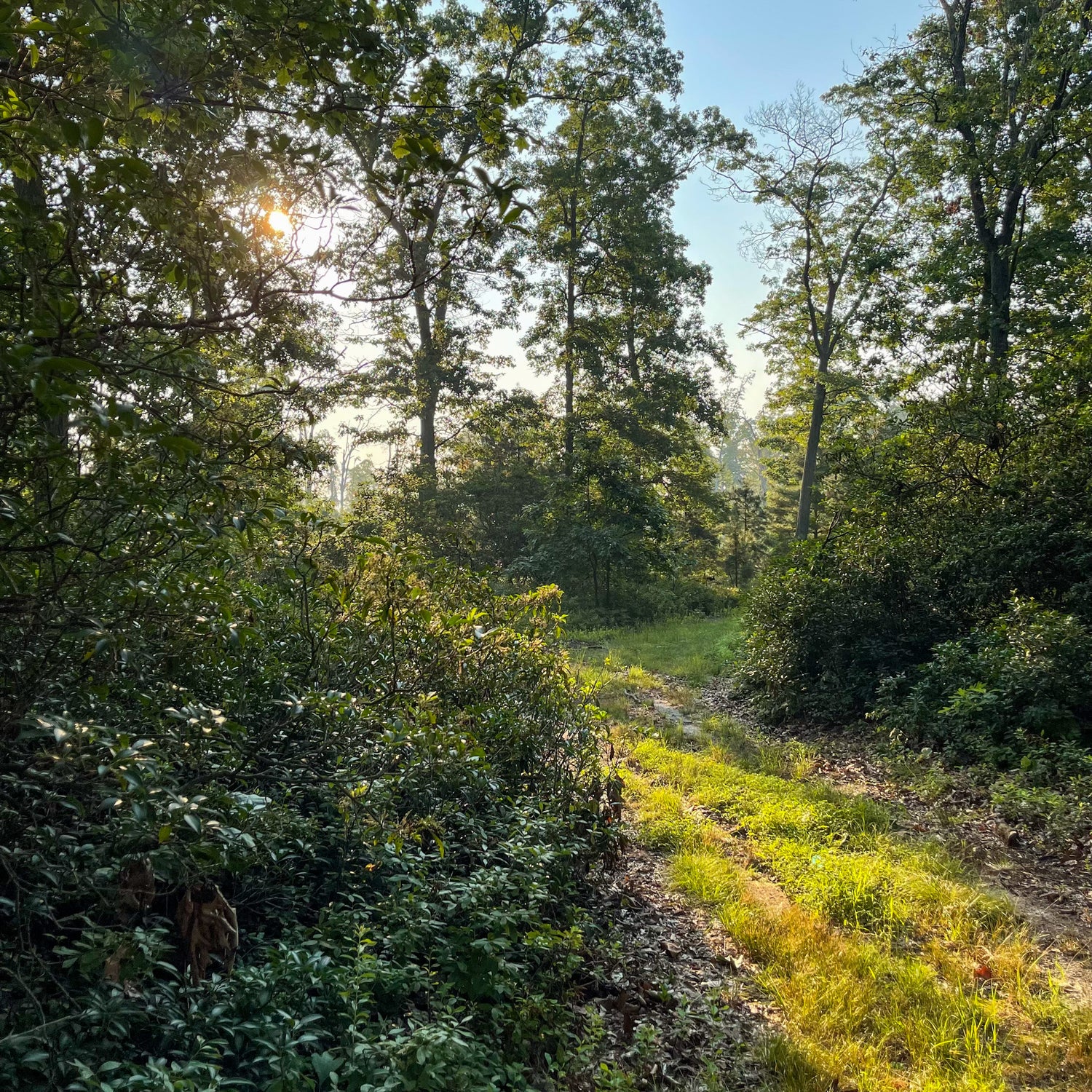
This year our first bluebird nest of the season was ready to be banded with our county coordinator, Bernnie Vasalli. We headed out to nesting box 4, located along one of our forest trails. This box is usually the first on our bluebird trail to have a nest and hatchlings each year, so it is one we always keep a close eye on. Bernnie also shared that this was the first nest she banded this season in the Gloucester and Salem County areas she covers, which made the day feel even more special.
Why Bluebirds Are Banded
Bird banding is part of a larger conservation effort. Each bird receives a small numbered band that fits loosely around its leg. If that bird is ever found or encountered again, the band number can help provide information about where it came from, how far it traveled, how long it lived, or whether it returned to the same area.
Banding birds requires a special permit and is done through the USGS North American Bird Banding Program. It is not something that can be done without the proper training and authorization, which is why we are grateful to have Bernnie working with us on our bluebird trail.

The Banding Process
The nestlings in this box were about 10 days old, which is an ideal age for banding. At this age, they are developed enough to be safely banded, but they are not ready to leave the nest yet. Bernnie began by setting up her supplies and preparing a small holding bucket where the nestlings would stay briefly during the process.
Each bird was carefully removed from the nest one at a time. Before placing each nestling in the bucket, Bernnie gently held it for a moment so any droppings would fall to the ground instead of inside the bucket. This helps keep the holding area clean while she works through the nest and keeps the process organized as each bird is banded.
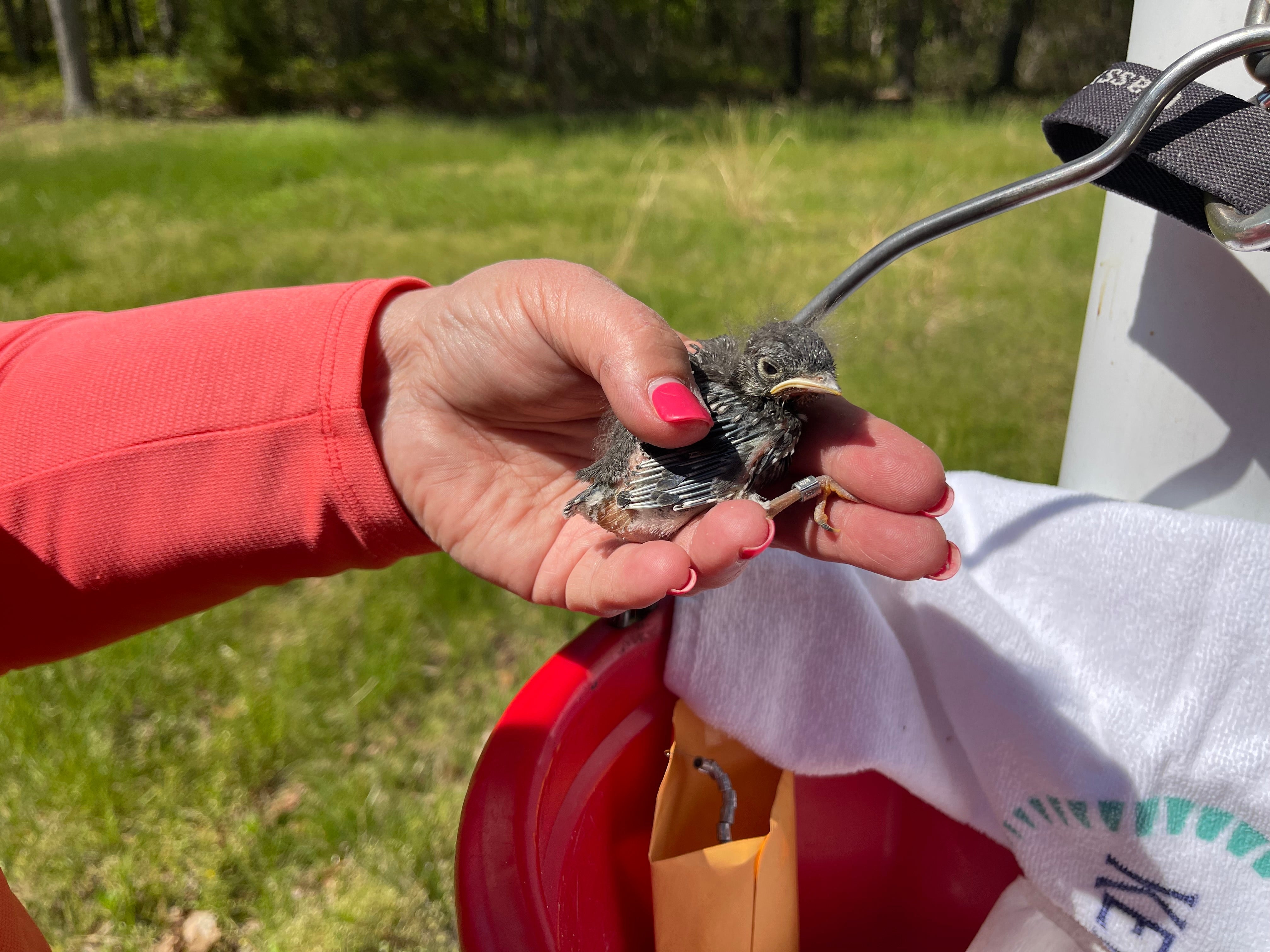
Each bird then received its own numbered band. Bernnie placed the band into a special banding tool, which opens it just enough to fit around the bird’s leg. The band is then gently crimped closed, fitting much like a loose bracelet. After the band is placed, she checks the fit to make sure it moves freely and is not too tight. Once each bird is banded and checked, it is returned safely to the nest.

The Final Step
After all of the nestlings are banded and returned to the nest, the final step is recording the band numbers. Bernnie writes down each band number used on her reporting sheet. This may seem like a small detail at the end of the process, but it is what connects the bluebirds on our farm to a much larger conservation effort.
With the records, each bird becomes part of a larger story about bluebird movement, survival, and conservation. It is one of the quiet behind-the-scenes parts of this work, but it is also one of the most important.

Following the Bluebird Season
We will continue monitoring our bluebird boxes throughout the season and sharing updates as more nests are built, eggs are laid, and nestlings begin to grow. Caring for the bluebird trail has become a special part of our farm because it gives us a chance to observe what is happening around us, learn from it, and take part in conservation in a very real way.
Each nest box gives us a small window into the lives of the birds that share this land with us, and each season teaches us something new. Follow along for more updates from this year’s bluebird season. To learn more about the New Jersey Bluebird Society, click here.