









One of the most common questions we receive about wildlife on our farm is about our Purple Martin setup — specifically what kind of gourd racks we use, where they come from, and why we chose this system. Purple Martins are unique in that, in much of the eastern United States, they rely almost entirely on human-provided housing. Because of that, the design, quality, and ongoing management of their housing plays a critical role in their success.
We believe that sharing exactly what we use — and why — helps demystify Purple Martin conservation and encourages responsible stewardship.
Where Our Purple Martin Equipment Comes From
All of our Purple Martin housing equipment comes from Troyer’s Bird’s Paradise in Conneautville, Pennsylvania. This is the original Troyer’s Bird Paradise — the source. While other websites sell Troyer-style products, this family-run business has been designing and manufacturing Purple Martin housing, predator guards, and accessories for decades and is deeply rooted in Purple Martin conservation.
Their equipment is manufactured in Pennsylvania and designed by people who actively understand the challenges Purple Martins face, from predation to invasive species pressure. They offer an extensive online catalog and also mail printed catalogs, which we highly recommend for anyone serious about learning proper Purple Martin management.
Our Gourd Rack System: Gemini 24 Unit Gourd Rack Super-Combo Kit
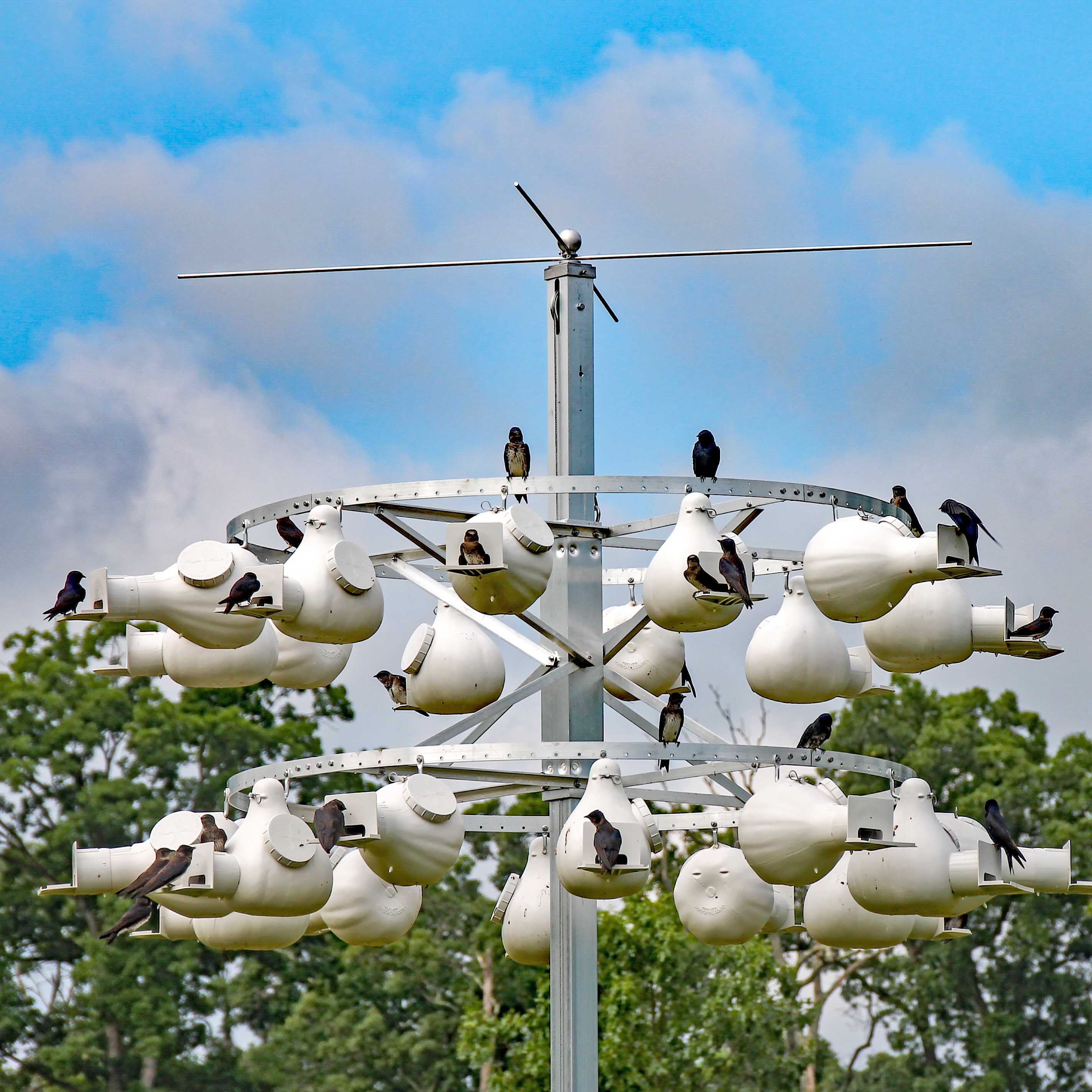
On our farm, we use the Gemini 24 Unit Gourd Rack – Super-Combo Kit, a system designed for active Purple Martin management and long-term durability. This rack features a two-tier aluminum hub with two five-foot diameter rings, each holding twelve gourds, mounted on a three-inch square aluminum pole that stands approximately sixteen feet tall once installed. The square pole design provides superior strength, and the all-aluminum construction ensures the system holds up season after season. One of the most valuable features is the cable and winch system, which allows the entire rack to be raised and lowered smoothly without the hub turning, making nest checks and maintenance far safer and more manageable.
It’s also important to note that the Purple Martins were already established on our farm when we purchased the property. The previous owner had provided housing, but it consisted of older-style gourds that could not be lowered for nest checks and offered limited protection from predators such as hawks and owls. Rather than simply maintaining the status quo, we chose to invest in a modern gourd rack system designed to actively support the birds already here. Our goal was not just to provide housing, but to give the existing colony the best possible chance to thrive through improved safety, accessibility, and ongoing management.
If you’re interested in seeing exactly how this system goes together, we’ve documented the full assembly process in a vlog-style video that walks through the setup step by step. Watching the build can be especially helpful for understanding the scale of the system and how the winch, hub, rings, and gourds all work together.
Currently, we have two Gemini racks on the farm, giving us a total of 48 gourd spaces, and in 2025 we were at full capacity with 48 nesting pairs. Based on that success, we took advantage of Troyer’s fall sale and purchased two additional racks. Our plan is to install one more rack this year and see how the colony continues to grow. Purple Martin populations fluctuate year to year, so expansion is always a balance of available space, proper management, and letting the birds decide — but we’re excited to see what the next season brings.

Choosing the Right System for Your Situation
While we use the Gemini 24 Unit Gourd Rack on our farm, it’s important to note that Troyer’s Bird’s Paradise offers a wide range of Purple Martin housing systems in different sizes and configurations. Not every site has the same space, goals, or colony size, and one of the strengths of Troyer’s equipment is its flexibility.
Whether someone is just starting with a small number of gourds or managing a larger, established colony, there are options designed to fit different landscapes and levels of experience. Factors like available space, pole height, accessibility for nest checks, and long-term management goals all play a role in choosing the right setup. The most important thing is selecting a system that allows for proper predator protection and active management — whatever size or style that may be.
The Gourds We Use and Why Design Matters
We use a combination of Troyer Vertical and Troyer Horizontal Gourds, both of which are designed with Purple Martin behavior, safety, and durability in mind. These gourds are blow-molded from white, sun-reflecting, high-density polyethylene plastic that contains UV inhibitors. Unlike natural gourds, they do not rot, split, peel, or crack, and they won’t shatter if accidentally dropped. Maintenance is minimal, typically requiring only a quick scrub at the end of the season.
Both gourd styles are equipped with Conley II tunnels, which are injection-molded from UV-inhibited plastic and designed to reduce predation. The overall length and tunnel design help deter owls, while added features such as traction treads, wing-entrapment guards, and wide porches improve safety for both adults and nestlings. These design elements have been shown to reduce fallouts and premature fledging, contributing to higher nesting success.
Another important benefit is flexibility. These gourds are pre-drilled and ready to hang, making them compatible with Troyer racks and existing martin houses. They offer all the advantages of properly prepared gourds without the time and labor required to grow natural gourds, cut access doors, install canopies, or repaint them year after year.
 Purple Martin sitting on Troyer's Vertical Gourd with Conley Tunnel II. Horizontal Gourd in background.
Predator Protection Is Not Optional
Predator protection is a critical part of any successful Purple Martin setup. Our rack is equipped with an EZ3 Pin Predator Guard, one of the largest diameter commercially available predator guards. Constructed from aluminum with a smooth, rust-proof surface, it is designed to prevent climbing by raccoons and other predators while also discouraging snakes through its size and integrated snake sniffer holes.
An important feature of this guard is that it is removable. This allows the entire gourd rack to be lowered to eye level for nest checks without compromising safety. The ability to easily access gourds while maintaining predator protection is essential for responsible management.
The Importance of Being an Active Purple Martin Landlord
Providing housing is only part of Purple Martin conservation. Successful colonies depend on active management. This includes regularly lowering the rack to check nests, monitoring for signs of mite infestations, and ensuring that invasive species are not taking over gourds intended for martins.
Nest checks allow landlords to catch problems early — whether that’s excessive parasites, abandoned nests, or unwanted occupants. Managing mites helps protect nestlings during critical growth stages, while controlling House Sparrows prevents injuries and nest failures. Predator guards, tunnel traps, and accessible rack systems all work together to make this level of care possible.
Purple Martins have adapted to living near humans. In return, they depend on us to manage their housing responsibly.

Purple Martin sitting on perch
Learning More About Purple Martin Conservation
For anyone interested in going deeper into Purple Martin conservation, we strongly encourage learning from organizations and communities dedicated specifically to this species. The Purple Martin Conservation Association is an excellent educational resource, offering science-based guidance on housing, management practices, migration patterns, and long-term conservation efforts. Their website is a trusted source for both new and experienced Purple Martin landlords.
Another valuable resource is the Purple Martin Fanatics Facebook group, which brings together landlords from across the country. It’s a place to ask questions, share observations, troubleshoot challenges, and learn from others who are actively managing Purple Martin colonies in real time. Seeing how different setups perform in different regions can be incredibly helpful.
Purple Martin conservation is a shared effort. The more we learn, connect, and manage responsibly, the better equipped we are to support these birds year after year.
Built for Long-Term Conservation
The Gemini 24 Unit Gourd Rack system aligns closely with our broader conservation values on the farm. Its durable construction, thoughtful design, and emphasis on active management help support higher occupancy rates, improved fledging success, and long-term colony stability.
Investing in high-quality Purple Martin housing isn’t about convenience — it’s about stewardship. By choosing equipment designed specifically for the birds and committing to ongoing care, we can help ensure that Purple Martins continue to thrive.
If you’re considering Purple Martin housing, we encourage you to research carefully, source responsibly, and view management as an ongoing commitment rather than a one-time setup. Thoughtful decisions make a real difference.







1 comment
Thanks for providing such a comprehensive overview. Purple Martins are an important part of South Jersey’s environmental landscape. The Martins help regulate mosquitoes and are sensitive to having safe places to nest and raise their young.